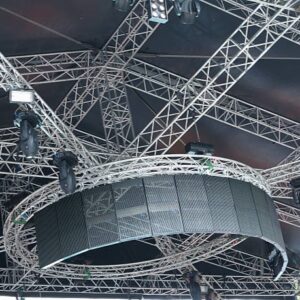


Live events have always been about emotion. Whether it is a stadium concert, a large-scale music festival, or a premium indoor performance, the goal is to immerse the audience in a moment that feels larger than life. For years, sound systems, stage design, and lighting have evolved rapidly. However, display technology at live events has often lagged behind the creative ambition of content producers.
That gap is now closing.
As HDR (High Dynamic Range) technology moves from televisions and cinema workflows into event LED display panels, concert visuals are undergoing a fundamental transformation. Brightness is no longer just about being visible under stage lights. Color is no longer limited to what traditional LED calibration can approximate. Instead, modular LED display panels are beginning to “take visuals seriously,” delivering deeper contrast, wider color gamut, and more faithful reproduction of creative intent.
It represents a shift in how live visual systems are designed, specified, and experienced. This article explains what HDR really means in the context of live events, how high brightness and wide color gamut LED screens change visual storytelling, and why this evolution matters for the future of concerts and large-scale performances.
From Visibility to Visual Authenticity: The Evolution of Event LED Displays
Traditionally, the primary challenge for event LED display panels was visibility. Screens needed to compete with strong ambient lighting, powerful stage spotlights, and outdoor daylight. As a result, brightness became the dominant performance metric. If a screen reached enough nits, it was considered suitable.
However, brightness alone does not guarantee visual quality. Early high-brightness LED screens often sacrificed color accuracy and contrast. Blacks appeared gray, highlights clipped easily, and subtle gradients disappeared. For dynamic concert visuals, this meant creative compromises.
HDR changes this paradigm. Instead of treating brightness as a standalone value, HDR focuses on the relationship between the darkest and brightest parts of an image. It also emphasizes how many colors the display can reproduce and how smoothly it transitions between them.
As a result, event LED display panels are shifting from basic output devices to creative-grade visual instruments.

What HDR Really Means for Event LED Display Panels
HDR, or High Dynamic Range, refers to a display system’s ability to present a wider range of luminance and color than standard dynamic range (SDR). In simple terms, HDR allows brighter highlights, deeper blacks, and more nuanced colors within the same frame.
In live events, HDR involves three core dimensions:
-
Higher Peak Brightness
-
Greater Contrast Ratio
-
Wider Color Gamut
When these elements work together, the visual result feels more realistic, layered, and immersive. Importantly, HDR in event LED display panels is not identical to HDR in consumer TVs. Live environments impose unique requirements related to viewing distance, screen size, modular assembly, and real-time content playback.
Therefore, implementing HDR on modular LED display panels requires purpose-built engineering rather than simple feature transplantation.
High Brightness: Beyond Being “Bright Enough”
Brightness has always mattered in concerts, but HDR raises the bar significantly. Instead of uniform brightness across the entire image, HDR emphasizes selective brightness.
Dynamic Highlights
In HDR-enabled event LED display panels, highlights such as reflections, stage lighting effects, or visual accents can reach significantly higher luminance levels without washing out the rest of the image. This capability allows content creators to guide audience attention more precisely.
For example, during a concert climax, a performer’s silhouette can remain detailed against an intensely bright background. Traditional SDR screens often force a compromise, either losing background intensity or crushing foreground detail.
Perceptual Impact in Large Venues
In large venues, brightness also affects perceived depth. HDR screens create a stronger sense of dimensionality by maintaining contrast even at high luminance levels. This effect makes visuals feel less “flat” and more spatial, reinforcing the emotional power of live performances.
From a product perspective, TOPLED’s modular event LED display panels are engineered to deliver high peak brightness while maintaining stable color performance. This balance is essential because excessive brightness without control leads to visual fatigue rather than immersion.
Contrast Ratio: Making Darkness Meaningful
Brightness alone cannot deliver HDR. Contrast defines how effectively a display separates light from dark. In live event visuals, contrast plays a crucial role in storytelling.
Deeper Blacks, Stronger Emotion
High contrast enables true blacks rather than dark gray approximations. On stage, this capability allows visual designers to use darkness intentionally. A minimal visual moment can feel intimate rather than empty. Shadows retain detail instead of collapsing into uniform darkness.
In concert settings, this emotional range matters. Visuals often shift rapidly between high-energy sequences and quiet, reflective moments. HDR-capable event LED display panels preserve emotional continuity across these transitions.
Reduced Light Pollution Between Modules
For modular LED display panels, contrast performance also depends on panel-level design. Excessive light leakage between modules reduces perceived contrast, especially in dark scenes. Advanced HDR-oriented panel structures minimize internal reflections and optimize mask design to preserve contrast consistency across large video walls.
Wide Color Gamut: Unlocking Creative Freedom
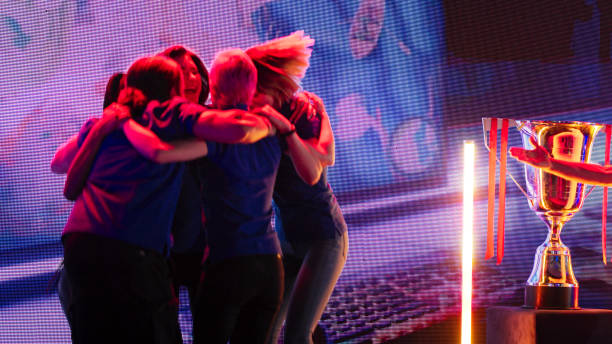
Color is where HDR becomes immediately noticeable to audiences, even without technical knowledge. Wide color gamut allows LED screens to display a broader range of hues, especially in saturated reds, greens, and blues.
Faithful Color Reproduction
Modern concert visuals often originate from cinema-grade or broadcast-grade workflows that already support wide color spaces. When event LED display panels cannot reproduce these colors, creative intent suffers.
HDR-ready LED panels align more closely with professional color standards, enabling designers to maintain consistency from studio to stage. Skin tones look natural, gradients appear smooth, and stylized visuals maintain their intended emotional tone.
Color Volume in Large-Scale Displays
Color volume refers to how color saturation behaves across different brightness levels. HDR event LED display panels maintain color richness even at high luminance. This capability prevents colors from appearing washed out when brightness increases, a common issue in older LED systems.
For large concert screens, where visuals often combine intense brightness with vivid color, this improvement significantly enhances realism and impact.
HDR and Modular LED Display Panels: Engineering Challenges and Solutions
Implementing HDR in modular event LED display panels requires overcoming several technical challenges. Unlike fixed consumer displays, modular panels must maintain uniformity across hundreds or thousands of units.
Uniform Brightness and Color Calibration
HDR performance depends on precise calibration. Each module must align in brightness, grayscale, and color response. Advanced calibration systems ensure that HDR visuals remain consistent across the entire screen, even at extreme brightness levels.
High Refresh Rates and Bit Depth
Live events demand smooth motion and real-time responsiveness. HDR content requires higher bit depth to avoid banding in gradients. At the same time, refresh rates must remain high to prevent flicker under camera capture and stage lighting.
TOPLED’s event LED display panels address this by combining high-bit-depth processing with professional-grade refresh performance, ensuring HDR visuals remain stable both to the human eye and broadcast cameras.
Thermal and Power Management
Higher brightness and advanced color processing increase power and thermal demands. Modular panel design must manage heat effectively to maintain performance and longevity. Efficient power distribution and thermal architecture are critical to sustaining HDR output during long performances.
How HDR Changes Content Creation for Live Events
HDR not only changes hardware expectations. It reshapes how content creators approach visual design for concerts and live events.
More Nuanced Visual Narratives
With HDR, designers can work with subtle transitions rather than exaggerated contrasts. Gentle lighting changes, atmospheric textures, and cinematic depth become viable on large event LED display panels.
Synchronization with Lighting and Stage Effects
HDR visuals integrate more seamlessly with advanced stage lighting. Instead of competing for attention, screens and lights complement each other. This integration reduces visual clutter and enhances overall coherence.
Increased Demand for High-Quality Content Pipelines
As displays improve, low-quality content becomes more obvious. HDR event LED display panels encourage higher production standards, pushing the industry toward more professional workflows.
Immersion and Audience Perception
From the audience’s perspective, HDR fundamentally alters how live events feel.
Reduced Visual Fatigue
Balanced brightness and accurate color reduce eye strain, even during long performances. This comfort allows audiences to stay engaged longer without feeling overwhelmed.
Stronger Emotional Connection
Realistic visuals enhance emotional resonance. When visual elements feel believable and expressive, audiences connect more deeply with the performance.
Memorable Visual Moments
HDR creates moments that feel “cinematic” even in massive venues. These moments often become the most photographed and shared aspects of an event, extending its impact beyond the live audience.
HDR as a Competitive Differentiator for Event LED Display Panels
As live events become more technologically sophisticated, HDR capability is emerging as a key differentiator. Venues, rental companies, and production teams increasingly evaluate LED display panels not just on brightness or pixel pitch, but on overall visual quality.
HDR-ready panels are future-proof investments, ensuring compatibility with next-generation content and broadcast standards. More importantly, they elevate the role of LED displays from functional infrastructure to creative centerpiece.
Conclusion: When LED Screens Take Visuals Seriously
When concert LED screens start to “care” about brightness and color gamut, the entire live event experience changes. HDR transforms event LED display panels into tools of visual storytelling rather than simple display surfaces.
By delivering higher brightness with control, deeper contrast, and wider color gamut, HDR-enabled modular LED display panels allow creative visions to reach audiences without compromise. They enhance immersion, support emotional expression, and elevate the perceived quality of live performances.
For TOPLED, HDR is not just a specification. It reflects a commitment to advancing event LED display panels toward true visual excellence. As live events continue to evolve, HDR stands at the center of a new era—where technology serves creativity, and screens finally do justice to the stories they tell.