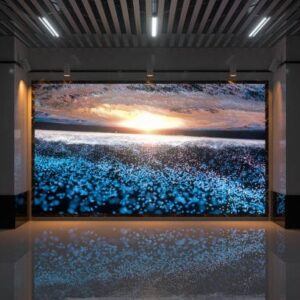

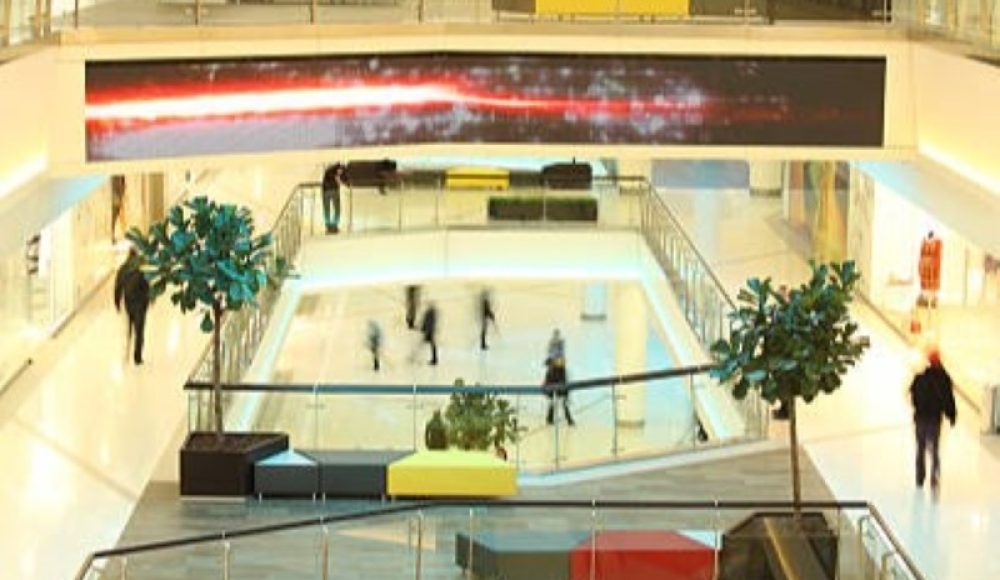
도시 진화의 역사 속에서, 건축은 돌과 유리로 이루어진 정적인 기념물에서 살아있는 건축물로 바뀌었습니다., breathing medium of communication. The traditional approach to digital signage—bolting a rectangular screen onto a finished wall—is rapidly becoming obsolete. 오늘, the most visionary projects treat the facade as a “Digital Skin.” The catalyst for this transformation is the curved LED screen. 에 의해 “weaving” digital modules directly into the architectural texture, designers are creating buildings that can dialogue with their environment. This article provides a deep dive into the engineering of flexible modules, irregular structures, and curtain wall integration, exploring how curved LED technology turns static surfaces into flowing narratives that reshape cityscapes.
1. Beyond Decoration: The Concept of the “Digital Skin.”
For decades, digital displays were viewed as “intrusive” to architectural purity. They were heavy, rigid, and ignored the building’s contours. The shift toward curved LED technology represents a fundamental change in design philosophy: the display is no longer an attachment; it is a constituent material.
The Fluidity of Modern Architecture
Contemporary architects like Zaha Hadid and Frank Gehry popularized organic, sweeping lines that reject the “box” aesthetic. A standard flat screen would break these lines. Curved LED screens, however, flow with the building. Whether it is a concave entrance that draws people in or a convex corner that wraps around a city intersection, these screens maintain the architectural “vibe” while adding a layer of dynamic information.
Narrative Potential
A building with a digital skin can tell a story. It can reflect the sky, visualize the pulse of city traffic, or display seasonal art. This “Media Architecture” turns a physical asset into a cultural landmark, increasing the commercial and social value of the property.
2. The Engineering of the Curve: Flexible Modules and Splicing
To achieve a “seamless weave,” the LED hardware must be as adaptable as fabric. This is made possible through specialized module engineering.
Flexible Ribbon Modules
Traditional LED modules use rigid PCB (Printed Circuit Boards). Modern curved solutions utilize Flexible PCB (FPC). These modules use a rubberized or silicone substrate that can bend, twist, and fold without breaking the internal circuitry.
-
Concave & Convex Adaptability: These modules can form tight radii, allowing them to wrap around circular pillars or fit into the “waves” of a complex facade.
-
Magnetic Mounting: Many flexible systems use high-strength magnetic points, allowing the screen to “snap” onto a pre-curved steel skeleton with micron-level precision.
Irregular Splicing and Geometric Freedom
Not all curves are simple circles. Some are “S-curves,” spheres, or hyperbolic paraboloids.
-
Trapezoidal & Triangular Modules: To create a sphere or a complex 3D shape, engineers use non-rectangular modules. By splicing these geometric shapes together, they create a surface that is perfectly smooth to the naked eye.
-
Seamless Corners: In traditional displays, a 90-degree corner leaves a “black gap.” Curved modules eliminate this, allowing content to flow around a corner as if it were a single, continuous sheet of glass.
3. Integration Strategies: Merging with the Curtain Wall
The ultimate challenge of “weaving” LED into architecture is the physical integration with the building’s curtain wall—the outer non-structural “skin.”
Transparent LED Mesh
For glass-heavy buildings, a solid LED wall is often undesirable because it blocks natural light. Transparent LED mesh is the solution.
-
Natural Lighting: With up to 80% transparency, these curved meshes allow occupants to see out while the outside world sees a high-definition video.
-
Structural Harmony: The LED strips are often integrated into the horizontal or vertical louvers of the building, making the tech nearly invisible when turned off.
The Skeleton and the Skin
To support a large-scale curved screen, the sub-frame must be topographically optimized.
-
Custom Curved Beams: CNC-bent steel frames act as the “ribs” of the display.
-
Thermal Management: Because curved screens often have varying depths, airflow is critical. Advanced integration designs include “passive cooling channels” that use the building’s natural convection to dissipate heat, ensuring the LEDs don’t degrade over time.
4. Reshaping the Urban Landscape: The Impact of Dynamic Facades
When 곡선 LED 스크린 are successfully woven into a building, it transforms the surrounding urban environment from a passive space into an interactive one.
3D Anamorphic Content
오늘, curved LED corners most famously enable naked-eye 3D displays. Because curvature adds depth, designers create visuals that appear to leap outward. 그러므로, seamless curvature becomes essential to preserve the illusion. Otherwise, any gap or misalignment instantly breaks the 3D effect.
Interactive Dialogue
Integrated LED skins can be connected to sensors.
-
Weather Response: The building’s color could shift from cool blue on a hot day to warm amber on a snowy evening.
-
Social Interaction: Passersby could interact with the facade via their smartphones, turning the building into a public art canvas.
5. Maintenance and Longevity: Protecting the Digital Investment
에이 “Digital Skin” is a massive investment, and it must be built to last as long as the building itself.
-
Front-Service Access: Modular designs allow individual pixels or modules to be swapped out from the front. This is crucial for curved screens, where accessing the back of the structure might be impossible without scaffolding.
-
IP67 Weatherproofing: Since these screens are the building’s skin, they must withstand typhoons, extreme UV radiation, and acid rain. Encapsulated GOB (Glue-on-Board) technology protects the delicate LEDs from the elements.
6. 결론: The Architecture of Tomorrow is Programmed
The “seamless weaving” of curved LED screens into architectural fabric represents the final bridge between the physical and the digital. We are no longer limited by the rigidity of materials. Architecture has become a living canvas, a programmable skin that can reflect the culture, commerce, and creativity of the city.
By utilizing flexible modules, transparent mesh, and precision splicing, 곡선 LED 스크린 allow the building’s lines to remain pure while its surface becomes dynamic. The facades of the future will not be measured just by their height or material, but by the stories they tell and the narratives they convey.