
Dans l’architecture traditionnelle de l’événementiel et du commerce, l'espace a toujours été défini par ses limites physiques : les murs, plafonds, et fonds statiques. Cependant, l'avènement de écrans LED géants à fond a fondamentalement réécrit le “grammaire spatiale” des environnements commerciaux. N'est plus relégué au rang de simple “planches de fond” pour information, ces massifs, les toiles numériques modulaires sont devenues les principaux architectes de l'atmosphère.
En utilisant un épissage transparent et une ultra haute résolution, les écrans LED géants repoussent les limites spatiales. De plus, le contenu panoramique place le public directement dans l'histoire. Que ce soit sur les scènes de concert, salons de l'auto, ou magasins de luxe, les espaces deviennent des supports narratifs. Par conséquent, les environnements physiques se transforment en plates-formes de narration modifiables. Cet article donc, examine comment la technologie LED guide l'émotion et la vision. Finalement, les lieux statiques évoluent vers des mondes d'histoire totalement immersifs.
1. Depuis “Arrière-plan” à “Environnement”: La fin de la toile de fond 2D
Le changement le plus significatif dans la grammaire spatiale est la transition d'une, écran bidimensionnel à un écran tridimensionnel, “enveloppant” environnement.
L'effacement des coutures
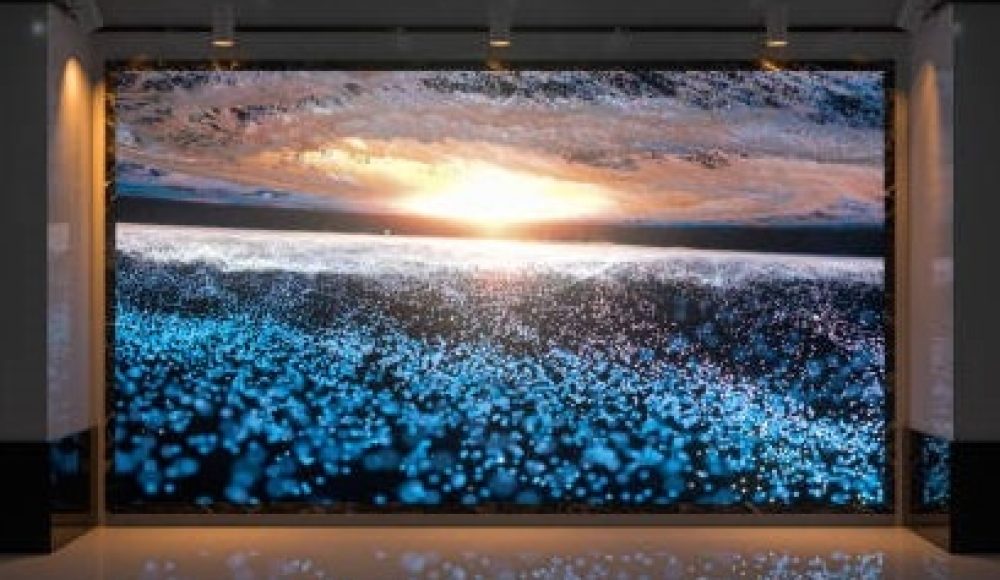
Les technologies d'affichage traditionnelles étaient limitées par les cadres et les cadres, qui rappelait constamment au spectateur la présence physique de l’écran. Écrans LED géants à fond utiliser une technologie d'épissage modulaire qui permet d'obtenir une véritable transparence. Quand un écran s’étend sur une courbe de 50 mètres sans une seule ligne visible, l'œil humain cesse de le percevoir comme un “afficher” et commence à l'accepter comme un “horizon.”
Champs visuels enveloppants
En utilisant concave, convexe, ou modules d'angle à angle droit, les concepteurs peuvent créer un champ visuel qui dépasse 180 degrés. Ce “immersion périphérique” est crucial pour la narration. Quand le stimulus visuel occupe tout le champ de vision du spectateur, le cerveau arrête de comparer l'image numérique à la pièce physique environnante, permettant une totale psychologie “présence” dans le récit numérique.
2. La scène comme portail: Diriger l’émotion dans les performances live
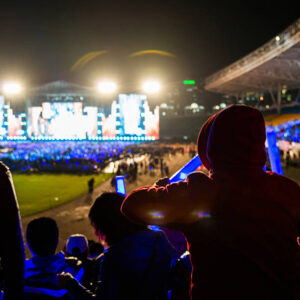
Dans le monde du concert et du théâtre, la scène n'est plus une plateforme pour un artiste; c'est un portail vers un “Un autre monde.”
Échelle et perspective dynamiques
Écrans LED géants à fond permettre aux metteurs en scène de manipuler le sens de l’échelle du public. Un artiste peut donner l’impression de se tenir au bord d’une nébuleuse cosmique ou à l’intérieur d’une cellule microscopique.. Parce que les contrôleurs LED modernes prennent en charge des résolutions extrêmes (8K et au-delà), les textures, comme l'eau qui coule ou la pierre en ruine, semblent concrètement réelles, même depuis la première rangée.
L'intégration du XR et du rendu en temps réel
Aujourd'hui, la « grammaire spatiale » de scène intègre de plus en plus la réalité étendue (XR). En synchronisant les fonds LED avec le suivi des caméras et les moteurs en temps réel, les perspectives restent exactes. Par conséquent, l'arrière-plan numérique bouge naturellement à chaque mouvement de la caméra. Par conséquent, un fort effet de parallaxe crée l'illusion d'une profondeur infinie. Ainsi, une scène de dix mètres se développe visuellement dans un vaste paysage numérique.
3. L'exposition comme simulateur: Redéfinir l'interaction produit
Pour les salons et expositions, en particulier dans les secteurs de l'automobile et de l'aérospatiale, le défi est souvent “fatigue statique.” Une voiture posée sur un tapis n'est qu'un objet.
Environnements de mouvement simulés
Dans les salons automobiles haut de gamme, écrans LED géants à fond servir de “Simulateurs environnementaux.” En encerclant un véhicule à grande vitesse, 360-images en degrés d'une route côtière ou d'un sentier de montagne accidenté, l’affichage trompe le système vestibulaire du public. Même si la voiture est à l'arrêt, le “écoulement” l'arrière-plan crée une sensation dynamique de vitesse et de liberté.
La boucle narrative
Dans un musée ou une exposition historique, l'espace est souvent segmenté en un “Long rouleau narratif.” Plutôt que de lire des plaques statiques, les visiteurs longent un mur LED de 100 mètres où l'histoire “flux” passés devant eux. L'espace dicte le rythme de l'histoire; à mesure que le visiteur se déplace, l'environnement numérique évolue, s'assurer que l'information est consommée comme une expérience plutôt que comme une corvée.
4. Le magasin phare comme archive vivante de la marque
Dans le secteur du commerce de détail, particulièrement pour “Centres d'expérience,” le but est de déplacer le client de “achats” à “habiter” la marque.
Le “Peau vivante” du magasin
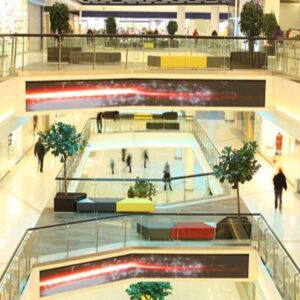
Les magasins phares de luxe utilisent de plus en plus écrans LED géants à fond comme un “peau numérique” pour leurs intérieurs. Au lieu de cher, finitions statiques en marbre ou en bois, les murs deviennent fluides. Le matin, le magasin peut évoquer le croustillant, lumière blanche d'un atelier parisien; le soir, il peut devenir chaud, galerie baignée de coucher de soleil. Ce “architecture modifiable” permet à la marque de rafraîchir toute son esthétique sans un seul jour de construction.
Lignes de visibilité dirigées
Les détaillants utilisent la luminosité et le mouvement des écrans LED pour chorégraphier les mouvements des clients. Contraste élevé, des visuels en mouvement sur un fond géant attirent naturellement l'œil humain vers l'arrière du magasin, éliminer efficacement “zones mortes” et s'assurer que l'ensemble de la surface de vente au détail est utilisé.
5. Piliers techniques du récit spatial
Pour réussir la reconstruction d'un espace, le écrans LED géants à fond doit répondre à des critères techniques spécifiques.
-
Pas de pixels & Distance de visualisation: Pour les magasins phares, un pas de pixel fin (P1.2 à P1.8) est nécessaire pour que la texture numérique reste invisible pour les clients à portée de main.
-
Profondeur de couleur et HDR: La narration immersive repose sur “Comme la vie” couleurs. Le traitement des couleurs HDR10+ et 16 bits garantit des ombres profondes et des reflets brillants., empêcher le “délavé” look qui brise l'immersion.
-
Taux de rafraîchissement élevés: Pour empêcher “vaciller” sur les caméras des smartphones (que chaque membre du public utilisera), un taux de rafraîchissement de 3 840 Hz ou plus est essentiel pour le partage viral sur les réseaux sociaux.
-
Faible latence: Dans des espaces interactifs, l'arrière-plan doit réagir au mouvement de l'utilisateur ou toucher sous 20 millisecondes pour maintenir l'illusion de la réalité.
6. Conclusion: L'espace qui parle
L'intégration de écrans LED géants à fond marque la fin de “idiot” architecture. Nous entrons dans une ère où les espaces ne sont plus figés, mais programmé. En maîtrisant ce nouveau “Grammaire spatiale,” marques, artistes, et les exposants peuvent transcender les limites des matériaux physiques.
L'espace n'est plus seulement le contenant d'une histoire; il est l'histoire. Que ce soit dans des stades énergiques ou dans des espaces de boutique raffinés, la technologie LED géante immerge pleinement le public. Donc, les téléspectateurs vivent le récit au lieu de simplement le regarder. Regarder vers l'avenir, les espaces les plus réussis s'adapteront instantanément aux idées créatives. Par conséquent, chaque visite devient une première unique et irremplaçable.